

Vegetable Gardening In Drought Conditions
As some regions are looking ahead to a parched, dry summer, a lot of people might be reconsidering the idea of planting a vegetable garden at all. When the weather is hot and rainfall scarce, vegetable gardens can really fail to thrive. Implement some of these drought resistant crops and methods in your gardening plans to harvest food from your backyard in spite of the climate.
Be sure to check out this handy guide on watering vegetables the right way.
 The Edible Front Yard Garden
Does your homeowners association prevent you from growing food in the front yard? What if they never even KNEW? My ebook, The Edible Front Yard Garden will show you how!
Use drought resistant methods when planting a vegetable garden
If you're not ready to completely throw in the towel, there are a number of tactics to consider that will still allow you to harvest fresh veggies from your backyard garden. Choosing drought and heat tolerant veggies is just one solution. [Check out these heat tolerant vegetables if you're facing a drought situation in your region.]
Dig the shoulder seasons
Expand your spring and fall garden plans. Trying to keep vegetables growing through the hottest months with limited water will frustrate even experienced gardeners. Instead, take advantage of crop varieties that thrive in cooler weather. Peas, greens, beets, and radishes will do just fine without the summertime heat.
Relief from the sun
Think about shade. Even plants that like full sun will appreciate just a little bit of afternoon shade if they're struggling with drought conditions and heat. Situate your garden so that they'll catch a little shade from trees you have on site. No trees? A patio umbrella or strategically placed shade cloth can help your garden tolerate a drought situation better. Similarly, space your plants so that they are just touching at full size to create a shaded—and cooler—soil surface.
Deep watering gets to the roots
When you do water, water deeply. This encourages plants to sent roots further into the ground. Surface watering might give plants an initial boost, but those surface roots tend to dry out more quickly than deeper roots.
Grow Some Greens!
Ready to grow fresh greens, no matter WHERE you live? Sign up for my
FREE quick-start guide and start growing some of your own food!
Get the Guide!
Make a wicking bed. These self-contained planters have a reservoir of water at the bottom and a wicking medium that slowly pulls water up to the plant roots.
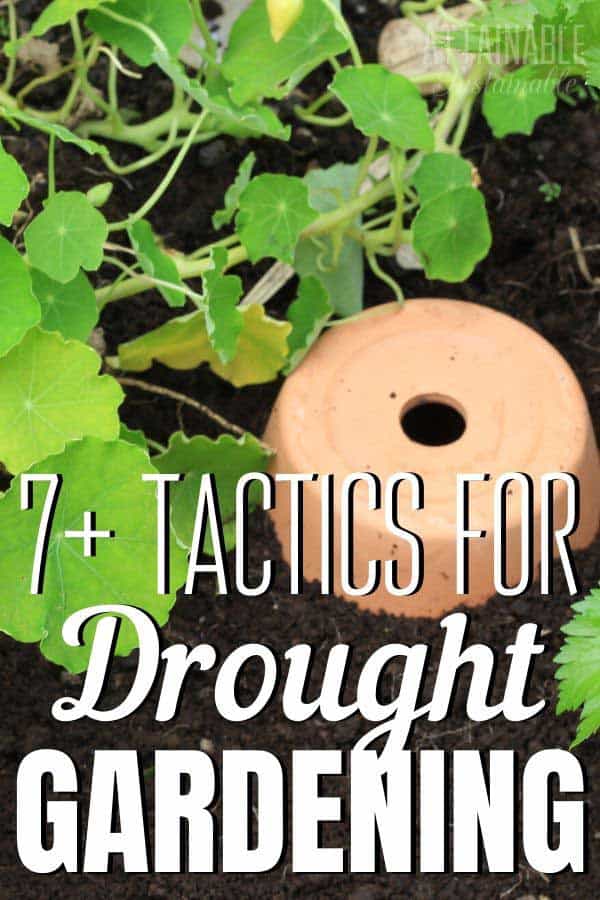
Consider experimenting with an olla irrigation system. This is a traditional method of deep watering. When planting a vegetable garden, submerge an olla—a porous vessel—in the ground near the base of your plants, leaving the top accessible. Fill the olla with water and it will slowly seep into the ground and be available as the plants need it. While ollas are available pre-made it would be expensive to outfit an entire garden with these. Not to worry; you can easily make your own with terra cotta pots — see the how-to in my book.
Try deep watering with a drainage pipe or even a nursery pot buried upright next to plants. Instead of watering at the surface, water into the pipe or pot so the water goes straight to the roots. Another alternative is to poke several small holes in a recycled plastic milk jug, fill it with water, and let it slowly seep water into the ground next to a plant.
Water retention in the garden
Amend your soil to incorporatelots of compost. A soil that's rich in compost will be able to hold onto what little soil moisture there is. Something to really consider when you plant your own garden.
Mulch, mulch, mulch! Adding 3″ to 4″ inches of mulch will help prevent the soil surface from drying out. Try straw, leaves, grass clippings, or wood chips to create a more drought tolerant garden. I've even seen people use shredded office paper, though it does look a bit like a random snowstorm hit. Consider using some of these permaculture methods in your vegetable garden design phase, too.
Consider trench composting. By burying your kitchen waste alongside your plants, you're nourishing your plants and also adding a bit more moisture to the soil. Sheet mulching is another method of gardening that improves moisture retention.
Keyhole gardens, popular in Africa, are used in other hot, dry climates as well. Keyhole gardens (so named because of their shape) have an active compost pile at their center. The central compost helps nourish the plants growing around it and acts as a source of moisture. Supplemental water goes right into the compost "well."
A soaker hose or drip irrigation system allows you to put water right where you want it. Invest in a simple timer and set it so that it goes off at night. That will give your plants a chance to drink up before the sun heats the ground, causing evaporation.
Dry farming
I just learned about the idea of "dry farming" tomatoes last year. It seems a method well-suited to drought, and I'm told the resulting fruit is superior. You do, apparently, need good soil in order to pull this off. Essentially, you'll water your tomato plants to get them established, then water sparingly as fruit matures.
Related: Planting Vegetables that Grow in the Shade for a Successful Harvest
Hugelkultur
If you have access to logs, branches, and other natural debris, consider trying the hugelkultur method. Simple enough that anyone can try it, this method is essentially just a matter of stacking natural material into a mound and planting on top of it.
The decomposing matter turns into healthy soil that will hold moisture, requiring little or no irrigation by the second year, mitigating some of the effects of drought. Yeah, it's not going to solve your problem this year, but if another year of drought follows this one, you'll be happy you got a jump on it.
If you're a container gardener, skip the terra cotta pots. They just dry out too quickly.
Choose drought tolerant plants for the vegetable garden
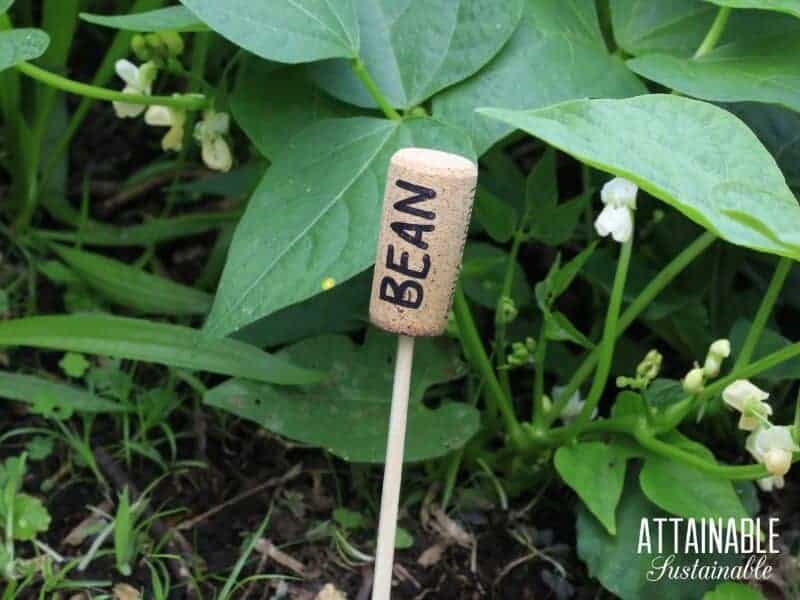
When planting a drought resistant vegetable garden, choose drought tolerant varieties of the crops you'd like to grow. There are drought tolerant varieties of beans, broccoli, chard, corn, cowpeas, cucumbers, eggplant, melon, okra, peppers, squash, and tomatoes.
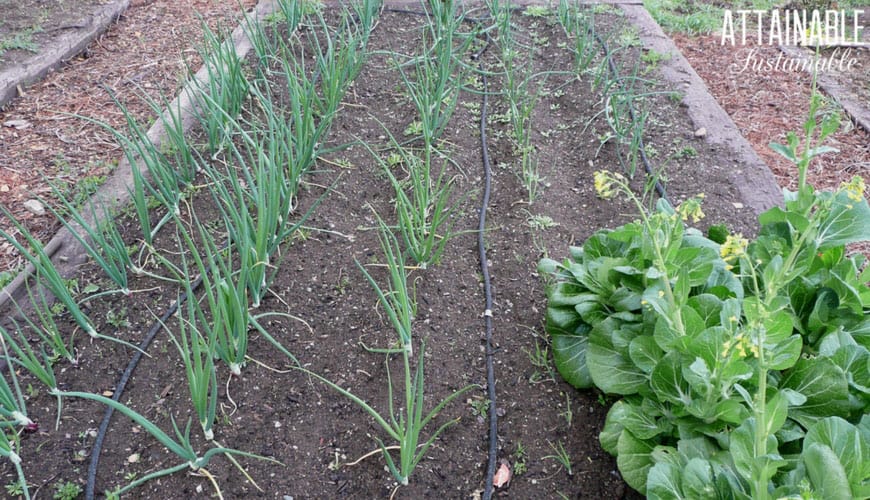
- Tomato Dirt has a list of both hybrid and heirloom tomatoes that do well in drought-like conditions.
- Baker Creek Seed Company lists some drought tolerant crops.
- Southern Exposure Seed Exchange suggests sticking with Tromboncino squash, and recommends varieties of beans, eggplants, and peppers that do well in hot, dry conditions.
- Choose vegetables that have a short growing season. Beans, for instance, can produce a full crop in a relatively short amount of time, using less water than a crop that takes longer to mature.
- Corn is shallow rooted and not a great choice for growing during a drought. Opt for a more drought tolerant variety if you really want to grow corn.
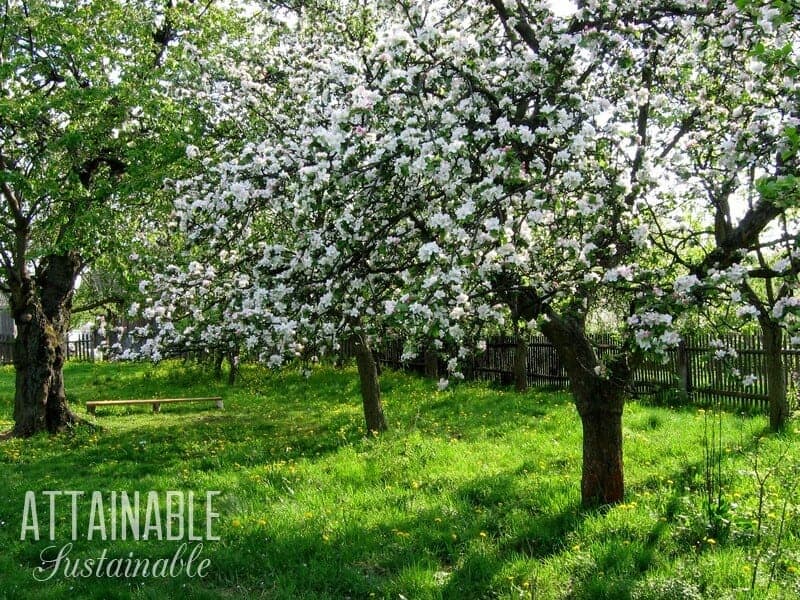
- And don't discount trees.They may not fit your idea of a "garden" plant but they do provide food and are generally drought resistant. Once established, most fruit trees can get by with very little supplemental water. [More about growing fruit trees here.]
Choose vegetables that produce a lot of food per plant. While a broccoli plant provides just a single head, tomatoes, squash, peppers, and eggplants, for example, will produce enough for many meals. Do your research to find drought tolerant varieties.
In addition to watering deeply, choosing vegetables that have a deep root system allows you to water less frequently. Tomatoes, melons, asparagus, and artichokes are fairly deep rooted.
Water
Don't let water down the drain if you don't have to! Collect it and use it to water your plants.
- Warming water for showering or dishwashing? Catch the water in a five-gallon bucket to use as irrigation water.
- Place a 5-gallon bucket in the shower with you while you're showering to catch some of that water.
- Water used for cooking pasta, potatoes, or hard boiled eggs can be taken out to the garden once it's cool.
- Instead of rinsing dishes under running water, do it camp style. Rinse them in a dish pan, then use the water in the garden.
- If you're bathing a baby, that water, too, can go out to the garden.
If your growing area is sloped at all, consider creating swales to slow down any rainwater that does come from the sky. Geoff Lawton uses this technique as part of his permaculture method.
Originally published January 2014; this post has been updated.
Vegetable Gardening In Drought Conditions
Source: https://www.attainable-sustainable.net/growing-food-drought/
Posted by: mooreadaystromple49.blogspot.com
0 Response to "Vegetable Gardening In Drought Conditions"
Post a Comment